
News from 2026-10-15 / DEG
Reliable partners in volatile times – an interview with Eva Miriam Fuchs and Jan Müller about DEG’s German business
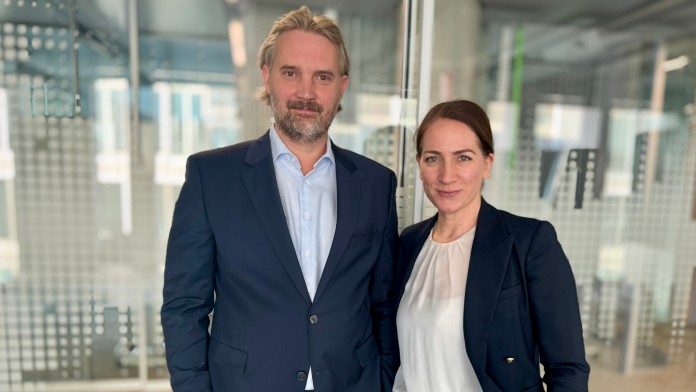
Since mid-2026, Eva Miriam Fuchs and Jan Müller have jointly headed DEG’s German Business department. In this interview, they discuss how DEG supports German companies investing in developing and emerging market countries and how the geopolitical situation is affecting international business. They also explain why, in addition to long-term financing and a local presence, high environmental and social standards contribute to the success of foreign investments.
You jointly manage the German Business department. How do each of you contribute personally to this role?
Eva Miriam Fuchs: We have both been involved in development finance for a long time, know the organisation very well and have supported many business transactions in different regions of the world. Our experiences and perspectives complement each other very well. Our shared aim is to further develop business with German companies. The work of an international development finance institution with a clear focus on promoting the private sector by no means begins in the partner countries. It often starts right here in Germany, assisting companies as they grow internationally.
Jan Müller: Supporting German companies is a core part of DEG’s founding mission. In view of the current political and economic situation, this task is becoming increasingly important. We believe that the interests of the German economy and development cooperation are not mutually exclusive: when German companies invest successfully abroad, they generate added value and create jobs in the partner countries, and at the same time boost their own international competitiveness.
How would you describe the current mood among German companies?
Jan Müller: The mood is rather subdued. Weak growth in Germany and global challenges are weighing on many companies. Small and medium-sized enterprises (SMEs) and family-run businesses in particular are now thinking very carefully about whether they should invest abroad or venture into a new market. Nevertheless, German SMEs have enormous potential and remain the powerhouse of Europe. The situation is often portrayed as being worse than it actually is. We can offer companies additional reassurance in this regard, because we have supported many international investments, benefit from a strong local network and remain by their side for the long term.
Eva Miriam Fuchs: We are living in a very volatile period. Companies can no longer simply rely on stable trade agreements, unimpeded transport routes or smooth supply chains. Our customers greatly appreciate us as a steady partner in turbulent times. We also support companies making strategic adjustments, for example when they want to shift production closer to key markets or diversify their supply and manufacturing structures.
How exactly does DEG support German companies with their international investments?
Eva Miriam Fuchs: It often starts with long-term financing. We are prepared to go into developing and emerging market countries where German domestic banks sometimes struggle to offer finance. DEG is well placed to assess the risks there and develop suitable financing structures. We don’t compete with local banks, but rather complement their services.
Our portfolio ranges from small loans starting at EUR 500,000 to large syndicated loans of more than EUR 100 million. This allows us to support companies with very diverse needs and assist them through every phase of their development.
Jan Müller: We are also flexible when it comes to the type of investment. We support companies entering a market for the first time, setting up new production facilities and expanding existing plants. The key point is that it must be a long-term private investment in a developing or emerging market country. We then look at the project with an open mind and work out the most suitable and pragmatic solution.
What sets DEG apart from other financing partners?
Jan Müller: A key difference is that we can provide financing directly to local companies in the target country. We disburse the funds there and handle the relevant administration. Commercial banks, on the other hand, often provide financing to the German parent company, which then passes the funds on. Also, we are increasingly able to offer financing in local currencies. This helps companies to limit their exchange rate risks.
Added to this is our local experience and membership of the KfW Group. So, for example, if approval procedures stall or currency transactions are not authorised, we can support companies through our network, in partnership with KfW and other German stakeholders. Given the current geopolitical challenges, it is beneficial for companies to have the support of the ‘Federal Eagle’ when investing abroad.
Eva Miriam Fuchs: For us, ‘German Business’ means that we support German companies, promote German value creation and mobilise German capital for investment in developing and emerging market countries.
We are pragmatic and business-oriented. Working within the KfW Group, we are able to coordinate closely and combine solutions. This is particularly helpful for our customers where, for example, there are points of contact with KfW IPEX-Bank.
How important are environmental and social standards for DEG financing?
Jan Müller: In the past, some companies tended to view environmental and social assessments as little more than a box-ticking exercise. Today, many companies actively seek out this kind of external perspective. Especially in the case of subsidiaries located far away, we can identify risks which are also relevant to the company’s head office and owners. This applies not least to possible reputational risks.
Eva Miriam Fuchs: Only last week, an entrepreneur told me that DEG’s thorough due diligence on a previous transaction had highlighted further aspects that the company itself had not considered. Identifying and mitigating such risks before making an investment is a tangible added value that DEG offers. Our environmental and social due diligence is therefore not merely a requirement, but enhances the quality and long-term stability of an investment.
When should companies get in touch with DEG?
Eva Miriam Fuchs: Ideally, as early as possible. The sooner we are involved, the better we can advise the company and work together to develop a viable financing solution. Many companies come to us on the recommendation of others. Companies can also simply contact us via the DEG website.
Jan Müller: Of course, it costs nothing to speak to us and seek advice. We can make our network available and work together to consider which location, investment structure and financing are most suitable for the project in question. In doing so, we work closely with our representative offices in key target countries, KfW’s locations and the German Chambers of Commerce Abroad.